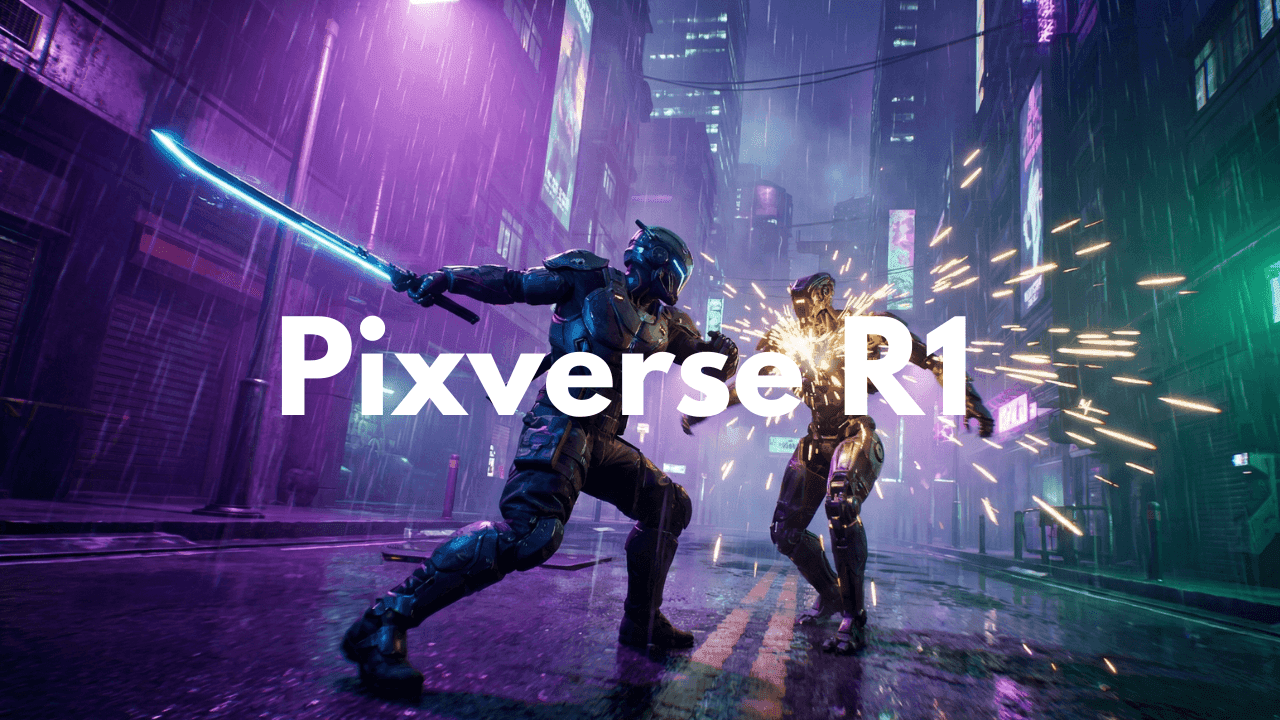
The AI video space just shifted. PixVerse, an Alibaba-backed startup that reached 100 million registered users last August, released R1 on January 13, 2026. It's the first real-time world model capable of generating interactive video at 1080P resolution with instant response to user input.
No more waiting. No render bars. No fixed-length clips. R1 produces continuous visual streams that respond to your direction as they unfold.
What Makes R1 Different
Traditional AI video generators work like this: you write a prompt, wait anywhere from 30 seconds to several minutes, and receive a fixed-length clip. If you want changes, you start over.
R1 flips this model. Video generation becomes a live conversation. You can instruct characters to cry, dance, or change direction while the video is actively generating. The system responds instantly, similar to how a director gives feedback on set.
Co-founder Jaden Xie describes the potential: users could influence how a micro-drama unfolds in real-time, or play video games with environments that generate dynamically based on their actions rather than following pre-designed storylines.
The Technical Foundation
R1 runs on three core technologies working together:
Omni is a native multimodal foundation model that processes text, image, video, and audio as a unified token stream. Instead of separate systems handling each media type, everything flows through one architecture trained end-to-end on real-world video data.
Memory enables infinite streaming through an autoregressive mechanism with memory-augmented attention. Traditional models produce clips with hard endpoints. R1 generates continuously while maintaining consistency across long sequences. Earlier frames inform later ones, keeping the visual world coherent over time.
IRE (Instantaneous Response Engine) makes real-time possible. It reduces sampling steps from dozens down to just 1-4 through temporal trajectory folding and adaptive sparse attention. The system also generates synchronized audio automatically.
Where R1 Fits in the Creator Toolkit
Real-time generation excels at interactive experiences: gaming, VR environments, live demonstrations, scenario simulations. It's built for situations where you need instant feedback and can't wait for renders.
Production-quality content creation has different requirements. When you're building polished videos for social media, marketing, or film projects, you need control over aesthetics, style transfer options, and the ability to iterate on specific frames.
This is where specialized tools remain essential. DomoAI handles the production side of AI video. Its image-to-video capabilities turn static images into stylized animations with Video-to-Video provides 50+ style options including anime, Ghibli, and cinematic realism. The Frames to Video feature lets you upload 2-8 keyframes and generate smooth transitions between them—giving you precise control over your narrative.
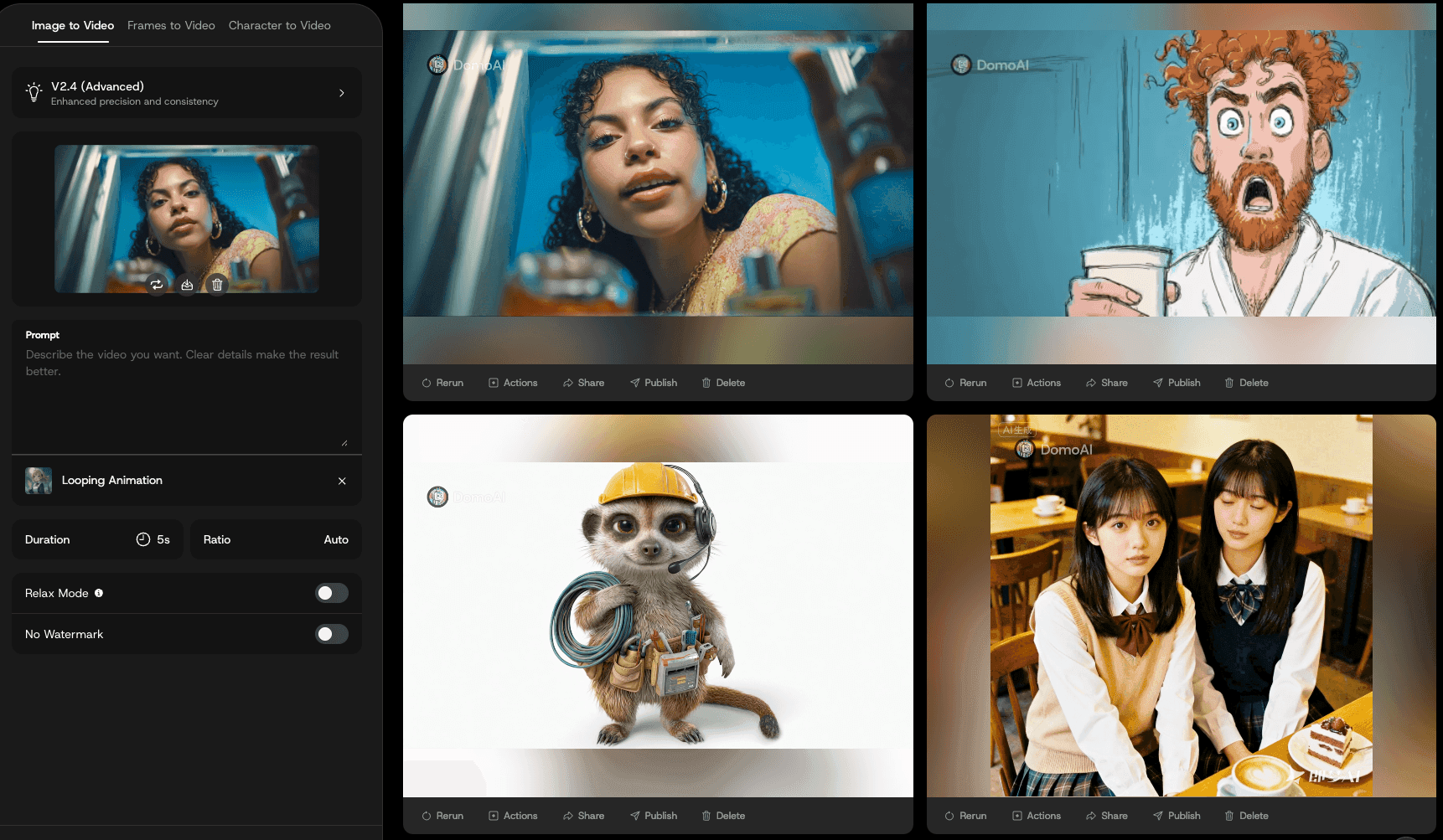
Think of it this way: R1 generates video like a live improv performance. DomoAI creates video like a carefully planned production shoot. Both have their place.
For a deeper look at PixVerse's standard (non-real-time) video tools, check out our PixVerse AI overview.
Practical Applications
PixVerse sees R1 enabling several new categories:
AI-native gaming where NPCs and environments evolve based on player actions in real-time, creating open worlds without pre-scripted limitations. For creators building gaming assets who need polished character animations, tools like DomoAI's character animation feature handle the production-ready output.
Interactive cinema and VR/XR where immersive experiences adapt instantly to viewer intent. Filmmakers working on final deliverables still benefit from controlled video-to-video style transfer and 4K upscaling.
E-commerce and live streaming with real-time product simulation and dynamic background generation. For AI ads and polished marketing content, pre-rendered generation with talking avatars and lip sync delivers broadcast-quality results.
Research and simulation for physics-compliant visual scenarios in scientific, industrial, and ecological modeling.
Current Limitations
The technical report acknowledges two constraints. Extended sequences may accumulate small prediction errors that affect visual consistency over time. And achieving real-time performance required trade-offs in rendering precision for complex physics compared to non-real-time models.
These limitations matter less for interactive applications where engagement trumps perfection. They matter more for polished content where every frame counts.
The Bigger Picture
R1 signals a broader shift in how we think about AI video. Generation time is dropping from minutes to seconds to instant. Interaction is moving from prompt-and-wait to real-time direction.
For content creators, this opens new possibilities while reinforcing the value of specialized tools. Real-time generation handles live interaction. Production tools like DomoAI's complete AI tools suite handle stylized content with precise aesthetic control—from anime video generation to cartoon video styles.
Combining both approaches—R1 for concept exploration and interactive prototypes, DomoAI for polished deliverables—could become a standard workflow. Anime creators might use R1 to explore ideas in real-time, then bring their best concepts into DomoAI's image animation pipeline for final output.
PixVerse aims to reach 200 million registered users by mid-2026 and plans to nearly double its team to 200 employees. The company reported $40 million in annual recurring revenue as of October 2025.
R1 is available now at realtime.pixverse.ai.
Frequently Asked Questions
How do I access PixVerse R1?
R1 is currently invite-only while PixVerse scales the infrastructure. Here's how to get access:
- If you have an invite code: Go to realtime.pixverse.ai/discover, enter your code in the "Invite Code" field, and click "Unlock Access."
- If you don't have a code: Click "Join the waitlist" on the same page to sign up for early access. PixVerse is rolling out invites as they scale capacity.
Once you have access, you can choose from preset themes (like "War Thunder: 1944" or "Scuba Diving") or create your own custom experience. R1 runs directly in your browser—no app download required.
Is PixVerse R1 free to use?
Pricing for R1 has not been announced. The current invite system suggests PixVerse is managing server load during the initial rollout rather than monetizing access immediately.
For reference, the standard PixVerse platform offers a free tier with 90 credits plus 60 daily renewal credits, with paid plans starting at $10/month. R1 may eventually tie into this system or operate separately—check the official site for updates as they scale beyond the invite phase.
How do I get an invite code for R1?
Three ways to get access:
- Join the waitlist: Visit realtime.pixverse.ai/discover and click "Join the waitlist." PixVerse is distributing codes as they expand server capacity.
- Follow PixVerse on social media: Companies often distribute early access codes through Twitter/X (@PixVerse_), Discord, and other channels. Watch for giveaways and announcements.
- Existing PixVerse users: Subscribers or active users on the standard platform may receive priority access. Check your email if you have a PixVerse account.
What's the difference between PixVerse R1 and regular PixVerse?
Regular PixVerse (V5, V5.5, etc.) generates pre-rendered video clips from prompts. You submit a text or image, wait for processing, and receive a fixed-length clip (typically 5-10 seconds). Great for polished content with style options like anime, realistic, and 3D.
PixVerse R1 generates video in real-time as a continuous stream. You can insert new instructions during generation and see results instantly. Built for interactive experiences rather than finished clips.
Think of regular PixVerse as a film camera and R1 as a live broadcast—different tools for different purposes.
Should I use R1 or DomoAI?
Use both for different parts of your workflow:
Use R1 when you need:
- Real-time interaction and instant feedback
- Concept exploration and rapid ideation
- Interactive prototypes or demos
- Gaming or VR experiences
Use DomoAI when you need:
- Polished, production-ready output
- Specific aesthetic styles (anime, Ghibli, realistic cinematic)
- Frame-level control with Frames to Video
- 4K upscaling for final delivery
- Lip sync and talking avatars
A typical workflow might use R1 to explore ideas interactively, then bring the best concepts into DomoAI for final production.
Who built PixVerse R1?
R1 was developed by Aishi Technology (爱诗科技), the Beijing-based company behind the PixVerse platform. Founded in 2023, Aishi Technology raised over $60 million in funding led by Alibaba with participation from Antler. The company has surpassed 100 million registered users globally as of August 2025.