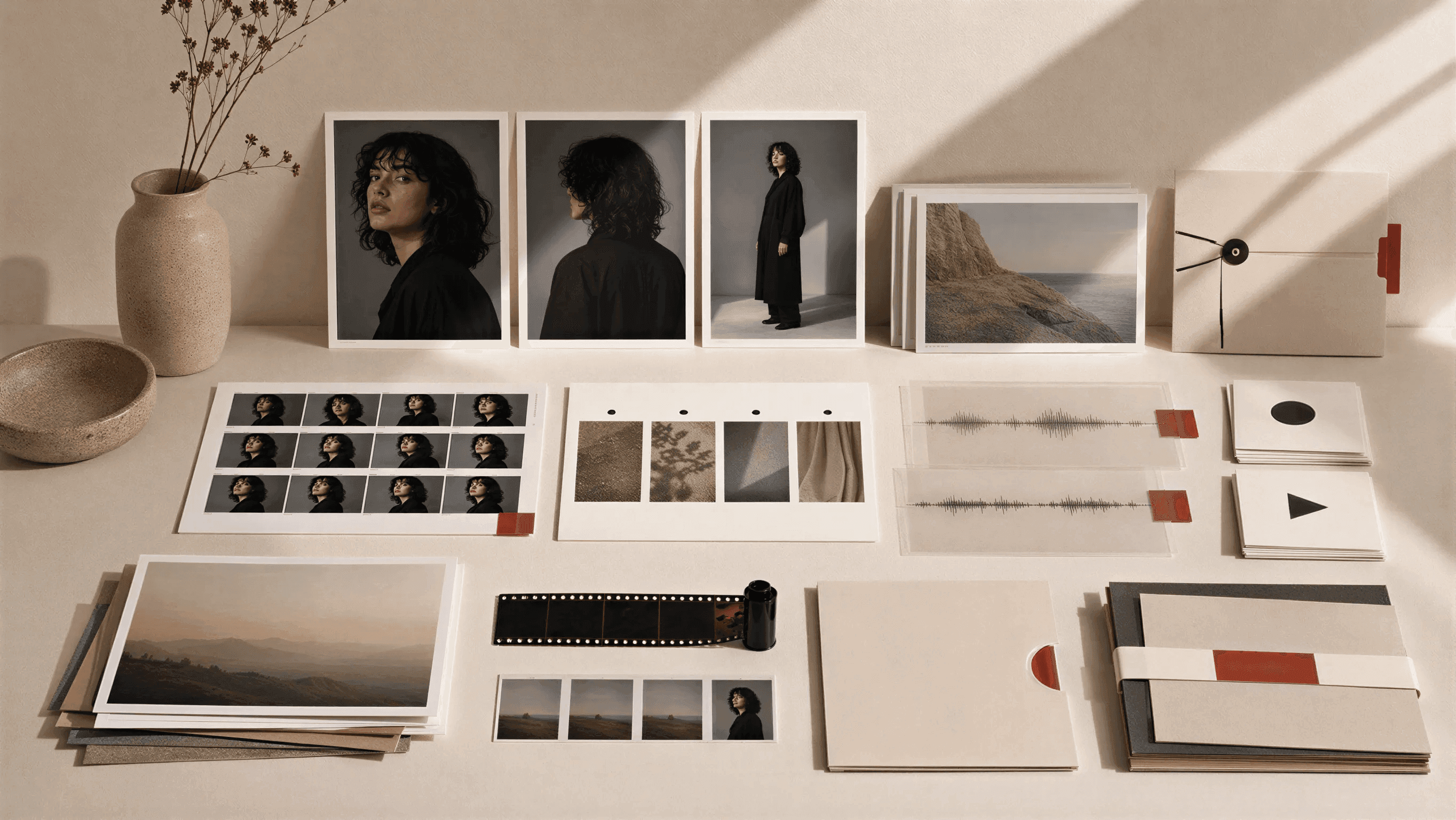
DomoAI Assets is your personal media library inside DomoAI. Uploaded and generated files remain available when you sign in on another device. You can rename assets and filter them by image, video, or audio, then select or drag a file into a supported creation tool without uploading it again.
Current limitation: Assets does not support folders yet. Use clear asset names and media-type filters to find reusable files. Use an external drive or cloud-storage structure for deeper project organization, archives, and backups.
An AI video asset library is not a folder for every generation. It is a small set of source images, reference clips, audio, prompts, and clean outputs that you will use again. Drafts and failed generations stay with the projects that produced them.
Open one recent project before you continue. Find the character, presenter, product, or scene you would use to make one more video today. If you must compare several files named final, start there.
Work with that project as you read. You need 10–20 files, access to DomoAI, and a blank note or spreadsheet. Do not organize your entire drive yet.
By the end, you will have a small reusable file set, two DomoAI workflow tests, and a clear decision about what to keep or archive.
Sort One Real Project Before You Build New Folders
Start with 10–20 files from a project you completed recently. Include source images, prompts, audio, reference clips, generated videos, and the delivered version.
Create four temporary groups:
- Use again: Files you expect to use in another project.
- Project only: Useful files tied to one campaign, client, song, or edit.
- Keep for context: Briefs, prompts, and notes that explain how you made the work.
- Remove or remake: Failed outputs, confusing duplicates, and files with no clear future use.
Make the decision based on the file itself, not the time or credits already spent on it.
A stable character image belongs in Use again. A vertical teaser with a campaign date belongs in Project only. If you are unsure whether you can reuse a motion clip, keep it with the original project until you confirm.
A prompt can belong in Keep for context, but save the image and workflow used with it. A prompt alone may not explain why one result worked.
Move obvious failures into Remove or remake. This includes broken hands, changed faces, incorrect product shapes, accidental text, and near-duplicate images you never selected.
You should finish with three to eight useful candidates. If Use again still contains most of the project, sort it a second time.
Checkpoint: You now have a short list worth testing, not a cleaner version of the original folder.
Build the Smallest Reusable File Set for Your Work
Different creators need different source files. Choose the row closest to your work, then adjust the list to match your actual projects.
| Creator | Start with these reusable files | Keep project-specific |
|---|---|---|
| Beginner making a recurring character | Main character image, one full-body image, one scene image, and a short reuse note | Tests, failed generations, shot notes, and delivered edits |
| Anime or VTuber creator | Main character image, full-body image, chosen outfit or prop, recurring scene, motion reference, and audio without background music | Episode scripts, one-off poses, subtitles, and scene-specific effects |
| Faceless creator or virtual presenter | Presenter image, voice recording without music or background noise, pronunciation notes, expression direction, and language-specific scripts | Campaign copy, dated intros, captions, and final music mix |
| Social or product creator | Clean product or character image, background image, reusable motion or audio, and usage notes | Prices, offer dates, platform captions, client logos, and ad variants |
For a recurring character, choose one main source image. Use it to define the face, hairstyle, outfit, and body proportions you want to keep.
Start every new variation from that image. Do not create a new portrait from the latest generated portrait each time. Small unwanted changes can build from one version to the next.
Use the Multi-Model Image Generator & Editor when the source image needs work. Fix the face, clothing, product details, background, or visible text before moving into video generation.
Write one plain-language rule beside the image:
Must stay: face shape, hairstyle, red jacket.
May change: expression, pose, camera angle, background.
Aim for five to eight useful files, not fifty candidates. Add another view or reference only when a real production needs it.
Checkpoint: You now have one main source file and only the supporting references that serve a clear job.
Should AI Video Files Stay by Project or by Type?
Keep work-in-progress files organized by project. Keep reusable files organized by subject and media type. One folder should not handle every stage of the work.
Your active project contains the working history. Keep the brief, storyboard, temporary prompts, test generations, edit files, and delivery versions together.
Use DomoAI Assets to reuse uploaded and generated media while you work. Rename assets and filter by image, video, or audio to find them again. Use History for recent creations. Assets does not support folders, so neither surface replaces the external folders where you keep reusable files and finished projects.
Your reusable library contains the smaller set you expect to use across projects. Organize it by subject and media type, such as characters, products, scenes, motion, and audio.
Your archive contains completed projects that you no longer open every week. It preserves the files needed to understand, restore, or reuse older work.
A simple external drive or cloud-storage structure can look like this; it is not a folder structure you create inside DomoAI Assets:
ACTIVE_PROJECTS/
└── music-video-02/
    ├── brief-and-storyboard/
    ├── working-sources/
    ├── generations/
    ├── edit/
    └── delivery/

AI_VIDEO_LIBRARY/
└── recurring-character/
    ├── source-images/
    ├── scenes/
    ├── motion-references/
    ├── audio/
    ├── reusable-outputs/
    └── reuse-note.md
Repeat the subject folder for each recurring character, presenter, product, or scene. Record the original project in the reuse note instead of keeping the reusable file buried there.
Name Files So You Can Recognize Them Later
Use words that you and your collaborators understand. A filename should identify the subject, job, useful detail, status, and version without becoming a code puzzle.
In this tutorial, approved simply means the version you chose for reuse. It does not require a formal team review.
Use this pattern as a starting point:
[subject]_[file-job]_[useful-detail]_[status]_v##.[extension]
Compare these examples:
singer-final-3.png
-> singer_identity_front_approved_v03.png

dance-good.mp4
-> singer_motion_slow-turn_reference_v01.mp4

new-stage-final.png
-> rooftop_scene_wide-16x9_approved_v02.png

social-final.mp4
-> singer-teaser_output_vertical_project-only_v04.mp4
In the first filename, singer names the subject and identity explains the file's job. front identifies the view, while approved separates it from drafts.
The last example matters. A good clip can still be project-only when it contains a campaign message, date, price, or client-specific element.
Keep a short reuse note beside the files. A spreadsheet, README, or text file is enough for many solo creators and small teams.
Copy this template:
Main file:
Use it for:
Must stay the same:
May change:
Source project:
DomoAI workflow and model:
Prompt and settings:
Usage notes:
Folder:
Last updated:
Here is a completed example:
Main file: presenter_identity_front_approved_v03.png
Use it for: Explainer intros and short presenter clips.
Must stay the same: Face shape, short dark hair, navy shirt.
May change: Expression, background, camera crop.
Source project: product-tutorial-01
DomoAI workflow and model: Image to Video; DomoAI 2.5.
Prompt and settings: 9:16; small smile, one nod, fixed camera.
Usage notes: Original team artwork; no client branding.
Folder: AI_VIDEO_LIBRARY/presenter/source-images/
Last updated: 2026-08-24
Fill the note while the project is still fresh. Six months later, a filename rarely tells you which prompt, model, audio, or usage detail mattered.
Can You Reuse DomoAI Assets Without Uploading Again?
Use the same four actions each time:
- Open Assets and filter for the media type you need.
- Check the filename or reuse note before choosing between similar items.
- Select or drag the image or video into the current creation panel. You do not need to upload it again.
- Treat the new result as a project file until you review it.
History appears on the right side of the workspace and shows recent creations. Copy, paste, or drag a recent image or video into the next tool when you want to continue working with it.
Use the creative job to choose the workflow:
| Creative job | Start with | DomoAI workflow | Review first |
|---|---|---|---|
| Add motion to a composed scene | One finished image containing the subject and scene | Image to Video | Face, subject shape, scene layout, camera motion |
| Apply a dance, walk, or gesture | Full-body character image and permitted performance video | Character to Video | Face, hands, body shape, clothing, source rights |
| Make a presenter or character speak | Clear image or video and clean speech or vocal audio | Talking Avatar | Lip sync, expression, identity, audio quality |
| Control appearance, scene, movement, and audio together | Image, video, and audio references with one job each | Omni Reference | Reference roles, identity, continuity, audio, export |
Use reference clips, voices, products, and likenesses you are allowed to reuse. If permission applies only to one campaign, keep the source and output with that project.
The same reusable files can support several workflows. Keep every new output with its current project until it passes the review later in this tutorial.
Test the Same Files in Two DomoAI Workflows
Choose two of the workflows below. Using the files twice is the quickest way to learn whether your library works.
For a recurring character, try Image to Video and Character to Video. For presenter content, try Talking Avatar and Image to Video. Choose Omni Reference when one shot genuinely needs several media types.
Animate One Complete Image
Prepare: Image to Video starts from one image. If the shot needs a character and a location, combine them into one complete image first.
Generate: Open Image to Video and use the image from Assets or upload it. Keep the first test simple: one main action and one camera movement.
The character turns toward the camera as a light breeze moves the hair
and clothing. The camera moves forward slowly. Keep the face, outfit,
background layout, and lighting consistent with the source image.
Review: Check the face, hands, clothing, scene layout, and camera movement. If the subject changes, return to the same source image and revise the prompt.
Save: Record the source image, prompt, ratio, and any setting that affected the result. Keep rough takes inside the project. Save a clip for reuse only when another edit could use it.
Apply an Existing Performance to Your Character
Prepare: Character to Video uses a character image and a reference performance. Choose a video with a visible subject, clear body movement, and simple camera motion.
Generate: Open Character to Video. Add a clear full-body or front-facing image and the performance video. Supported source formats include MP4, MOV, or AVI for video and JPEG, PNG, or JPG for the image. The image limit is 10MB.
Subject Only focuses the change on the main subject. Review the background because it may still shift.
Review: Generate more than one take when the movement is complex. Compare the body shape, face, hands, limbs, clothing, and contact with nearby objects.
Save: Keep the character image, motion reference, chosen settings, and selected output separate. Do not replace either source file with the generated clip.
Reuse a Presenter or Character in Talking Avatar
Prepare: Talking Avatar accepts an image or video with audio. Choose a clear portrait or presenter clip. Add speech or vocal audio from DomoAI Text to Speech or a supported MP3 or WAV file.
Generate: Keep the spoken text separate from the action or expression direction:
Script: Welcome back. Today we are building the next scene from the same source files.
Expression: Calm delivery, small smile, occasional nod, steady eye contact.
To make the same presenter speak another language, save that language's script, pronunciation notes, and audio together. Keep the presenter image separate so each version starts from the same visual source.
Review: Check lip sync, facial stability, expression, and audio before export. Add the full backing track, captions, and campaign wording later in CapCut, Premiere Pro, DaVinci Resolve, or another editor.
Save: Export a version with only the synced voice and video if you may change the music, captions, or campaign copy later. A version with dated copy or finished subtitles belongs to that project.
Combine Several Media Types in Omni Reference
Prepare: Use Omni Reference when the video needs separate references for the subject, scene, movement, or audio.
Use the smallest set that can describe the shot. More references do not automatically produce more control. Near-duplicate references can give the model conflicting details.
Generate: Give each input one job:
Image 1 controls the subject's appearance, body proportions, and outfit.
Image 2 controls the opening scene, lighting, and composition.
Video 1 controls movement timing and camera rhythm only.
Audio 1 controls soundtrack or dialogue timing only.

Create an eight-second 9:16 video.
0-3s: Fixed waist-high camera. The subject takes one step forward.
3-6s: Slow camera move toward the subject. The subject turns to the lens.
6-8s: Static close-up. The subject pauses.

Keep the face, hairstyle, body proportions, outfit, and scene layout unchanged.
Do not add extra people, text, logos, subtitles, or a different outfit.
Omni Reference currently accepts up to 30 images, 10 videos, and 10 audio files. Each uploaded video or audio file can run from 2–30 seconds. The combined video duration and combined audio duration each have a 30-second limit.
Those limits are capacity, not a target. Begin with one subject image, one scene image, and only the motion or audio references the shot needs.
Review: Check identity, clothing, scene layout, movement, audio, and whether the result plays and exports correctly.
Save: Keep failed takes with the project while you adjust the references. Move only a useful result to the review stage below.
If You Also Restyle Existing Footage
Video to Video begins with source footage rather than a still image. Keep the original clip, the chosen style or reference, the settings you want to repeat, and the approved restyled result as separate files.
Do not replace the original with the restyled output. You may need the source again for a different look or a cleaner regeneration.
Review the Two Results and Decide What to Keep
Use this review card for both workflows:
Workflow:
Source files:
Allowed changes:
Details that had to stay the same:
Prompt and settings:
What worked:
What changed unexpectedly:
Usage notes:
Decision: use again / project only / remove or remake
The comparison should answer a practical question: did the reusable files save you from rebuilding the character, product, presenter, or scene?
Do not judge only by visual quality. A strong result can remain project-only when it contains a date, price, client logo, finished caption, or restricted source performance.
Choose one of three outcomes:
- Remove or remake: The face changed, a hand broke, the product warped, or the shot no longer matches the source.
- Project only: The result works, but it includes campaign text, a client logo, a dated offer, or a restricted reference.
- Use again: The result is clean, its source is clear, and another project could use it without removing one-off content.
Ask four questions before moving a result into the reusable library:
- Would a different project realistically use it?
- Can you identify the source files and DomoAI workflow behind it?
- Are its status, origin, and usage limits clear?
- Can you distinguish it from older or rejected versions without opening several files?
If one answer is no, leave the result with the project. Project-only files are not inferior. They simply have a narrower job.
Fix Five Problems That Usually Break Reuse
The Character Changes a Little in Every Project
You may be creating each new source image from the latest generated version. That passes small unwanted changes forward.
Return to the same main source image whenever you create a new angle or shot. Save new angles as supporting references, not automatic replacements.
For a longer production, use this guide to keep an AI character consistent across scenes.
The Outfit, Prop, or Setting Keeps Changing
Several references may be trying to control the same detail. The model receives conflicting instructions.
Remove near-duplicates. Use one image for the subject and another for the setting. State which details must remain unchanged.
You Found the Right Look but Cannot Reproduce It
The prompt may be missing the source image, workflow, model choice, ratio, or another important setting.
Update the reuse note while you can still reconstruct the process. Save only the details that explain the result or affect future reuse.
Assets and History Are Becoming Hard to Scan
Recent and reusable media can accumulate quickly. Do not treat every generation as a long-term asset.
Keep creating in DomoAI, but decide what to keep when the project closes. Move only selected files into the external reusable library.
A Voice, Performance, Product, or Likeness Has Unclear Usage Limits
Keep the source and result with the project until you know whether you may use them again. Note where the source came from and any known limit.
Prove the System with a 20-Minute Second-Project Test
Close the original project before starting this test.
- Find the current source image using only the subject, file job, and status in its filename.
- Open a different DomoAI workflow from the one you used first.
- Reuse the source image and one relevant reference without searching the original project.
- Generate a new result and complete the review card.
- Use the reuse note to trace the new result back to its source and settings.
- Decide whether the result belongs in Use again, Project only, or Remove or remake.
If you work with someone else, ask that person to repeat the test without your help.
Your library works when you or a collaborator can find the source, use it, explain the result, and decide where it belongs. You should not need to open the original project.
If you get stuck, note what was missing. Fix the filename, folder, or reuse note, then repeat the test.
Move Completed Projects Out of the Active Workspace
Six months from now, you may need the clean export, source image, prompt, or audio from an older video. You probably will not need every failed generation.
When a project closes, export a small archive containing:
- The selected source images and references.
- The reuse note and important usage details.
- Prompts and settings worth repeating.
- Clean reusable outputs.
- The final delivery files.
- Any project files needed to reopen or understand the edit.
The source files you still use every week remain active. The completed project package, older versions, and delivery history can move to long-term storage.
Store the package wherever you already keep finished work, such as an external drive, cloud storage, or a personal NAS. Choose a location that gives you enough capacity, reliable access, and a clear folder structure for retrieving older projects.If you prefer to keep your archive locally while retaining network access, a personal cloud NAS can be one practical storage option.
This is a manual export-and-store step. It is not an automatic sync or a DomoAI integration. The workflow does not depend on one storage product.
An archive is also not a backup. The archive keeps inactive work organized for later retrieval. A backup protects important files when the working copy or archive is lost or damaged.
Questions Creators Usually Ask
Should I Overwrite an Old Source Image?
No. Save the update as a new version, compare it with the current file, and change the status only after review. Keep the older version when existing projects still depend on it.
Should I Keep Every Prompt?
No. Keep prompts that help reproduce or adapt a useful result. Save the related source image, DomoAI workflow, chosen model, and important settings with them.
How Should I Name Square, Vertical, and Wide Versions?
Add the ratio or format to the useful-detail field. For example, use 1x1, 9x16, or 16x9 so you can choose a version without opening it.
Do I Need Special Asset-Management Software or a NAS to Start?
No. Begin with one project, clear filenames, a small reuse note, and a backup for files you cannot replace. Add more tools only when this method stops working.
Start with One Project Today
Do not reorganize your entire archive. Choose one recurring character, presenter, product, or scene and build a five-to-eight-file set.
Use that set in two DomoAI workflows. If you can find it again, explain the result, and reuse it without reopening the original project, the library is already doing its job.